Refrigerant Table
Compare common HVAC-R refrigerants by ASHRAE safety classification, refrigerant type, Global Warming Potential (GWP), and Ozone Depletion Potential (ODP). This refrigerant reference guide includes commonly used refrigerants across air conditioning, commercial refrigeration, industrial refrigeration, and CO2 systems.
- CFC (Chlorofluorocarbon): Ozone Depleting
- HCFC (Hydrochlorofluorocarbon): Less damaging to ozone than CFC
- HFC (Hydrofluorocarbon): High GWP
- HFO (Hydrofluoroolefin): Low GWP
- A1: Non-toxic, no flammability
- A2: Non-toxic, very low flammability
- A3: Non-toxic, high flammability
- B2L: Toxic, very low flammability
Refrigerant Safety Classifications
What Do Refrigerant Safety Classifications Mean?
ASHRAE refrigerant safety classifications are divided into toxicity and flammability categories.
Toxicity Classes
Flammability Classes
Examples
What is GWP?
Global Warming Potential (GWP)
Global Warming Potential (GWP) measures how much heat a refrigerant traps in the atmosphere compared to carbon dioxide (CO2), which has a reference value of 1.
Lower GWP refrigerants are becoming increasingly important as environmental regulations evolve throughout the HVAC-R industry.
Examples
What is ODP?
Ozone Depletion Potential (ODP)
Ozone Depletion Potential (ODP) measures a refrigerant’s impact on the ozone layer.
Older refrigerants, such as CFC and HCFC refrigerants, generally have higher ODP values, while most modern refrigerants now have an ODP of 0.
A2L Refrigerants
Understanding A2L Refrigerants
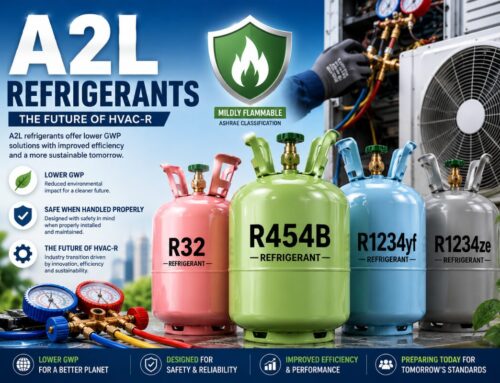
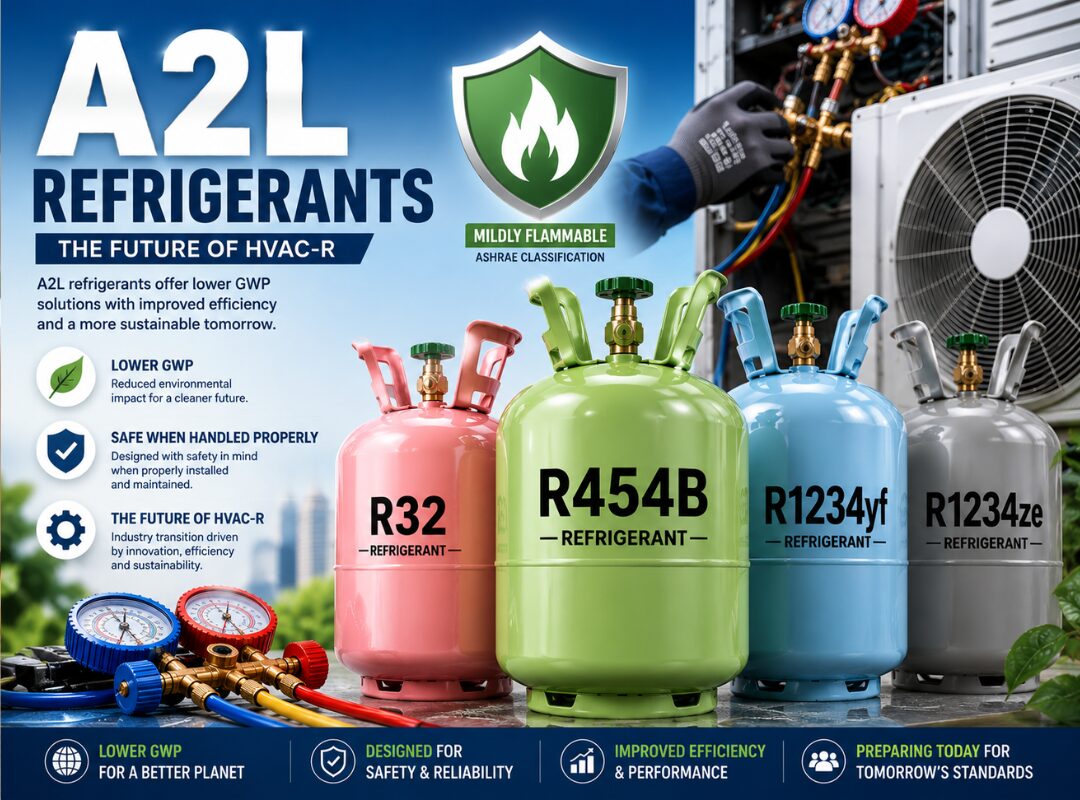
A2L refrigerants are lower GWP refrigerants with mild flammability characteristics. These refrigerants are becoming increasingly common as the HVAC-R industry transitions away from higher GWP refrigerants.
Common A2l Refrigerants
A2L refrigerants help reduce environmental impact while supporting improved system efficiency and long-term regulatory compliance.
Natural Refrigerants
Natural Refrigerants in HVAC-R Systems
Natural refrigerants continue to grow in popularity due to their low environmental impact and long-term sustainability.
Common Natural Refrigerants
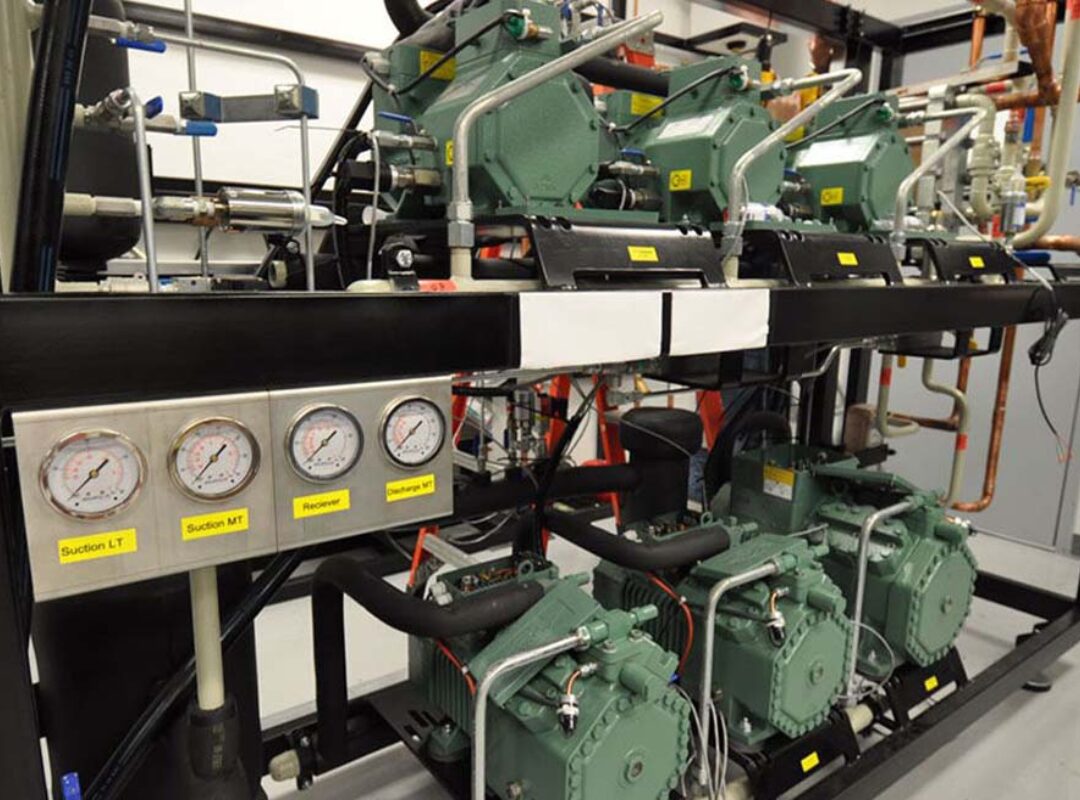
CO2 refrigeration systems are especially seeing increased adoption in supermarkets, industrial refrigeration, and heat pump applications due to their ultra low GWP and long-term regulatory viability.
Related Resources
Frequently Asked Questions
What is an A2L refrigerant?
A2L refrigerants are lower GWP refrigerants classified as mildly flammable according to ASHRAE safety standards. Common A2L refrigerants include R32 and R454B.
What does GWP mean in refrigerants?
Global Warming Potential (GWP) measures how much heat a refrigerant traps in the atmosphere compared to carbon dioxide (CO2), which has a GWP value of 1.
What does ODP mean?
Ozone Depletion Potential (ODP) measures a refrigerant’s impact on the ozone layer. Most modern refrigerants now have an ODP of 0.
What refrigerant is replacing R410A?
R454B is one of the primary lower GWP replacements for R410A in modern air conditioning systems.
Is CO2 refrigerant environmentally friendly?
R744 (CO2) refrigerant has a GWP of 1 and an ODP of 0, making it one of the most environmentally friendly refrigerants used in HVAC-R systems.
What is the difference between HFC and HFO refrigerants?
HFC refrigerants are traditional synthetic refrigerants with higher GWP values, while HFO refrigerants are newer, low-GWP alternatives designed to reduce environmental impact.
What are natural refrigerants?
Natural refrigerants include CO2 (R744), ammonia (R717), and propane (R290). These refrigerants are commonly used because of their low environmental impact and long term sustainability.