Why Dynamic Performance Matters in CO2 Check Valves
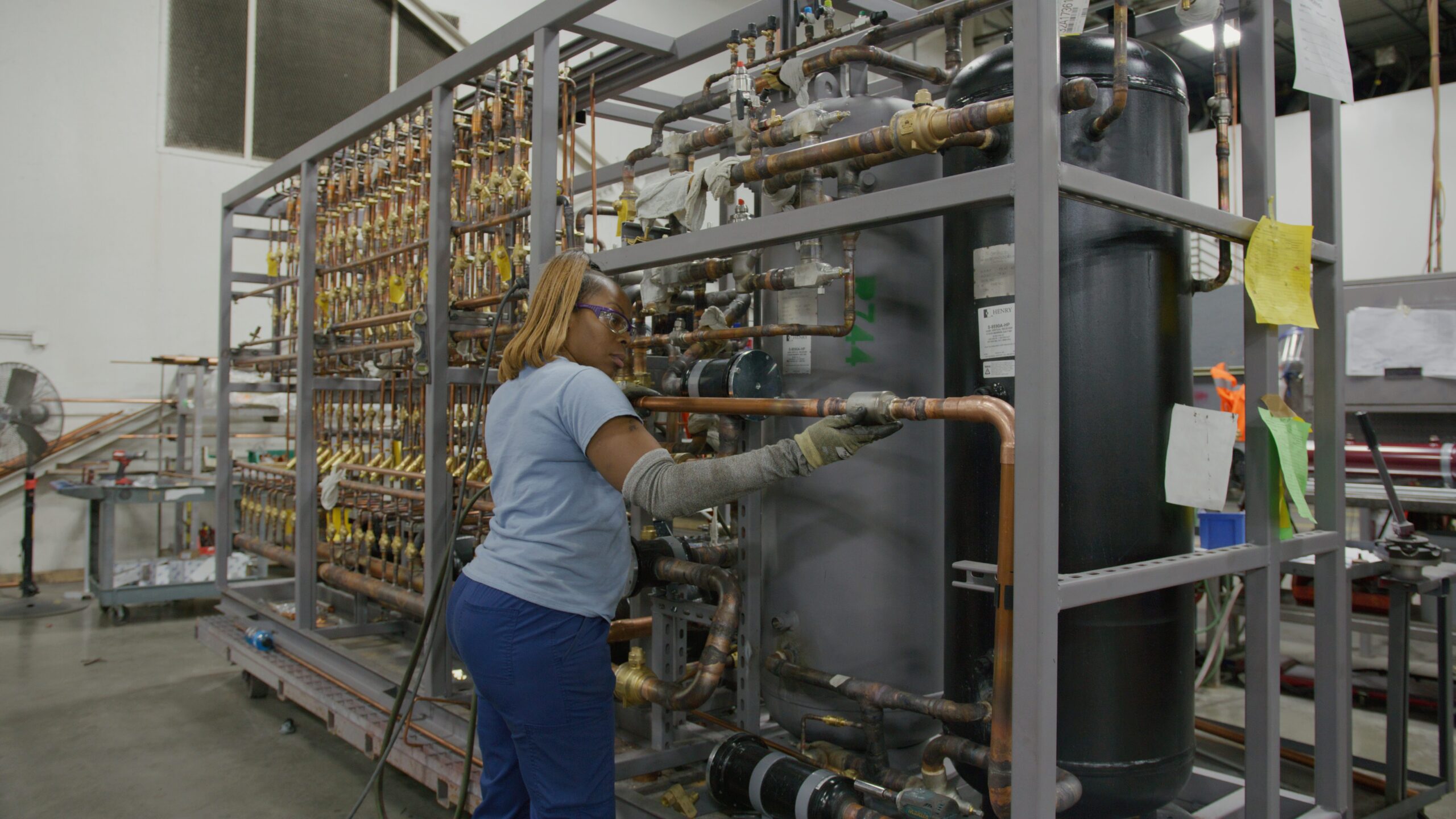
In transcritical CO2 refrigeration systems, check valves are often treated as straightforward protective components. As long as a valve carries a CO2 pressure rating, it is assumed to perform reliably in the background. In practice, the dynamic behavior of CO2 check valves plays a meaningful role in system efficiency, control stability, and long-term reliability.
Cracking pressure, internal leakage, and response time are three characteristics that deserve closer attention when specifying check valves for high-pressure CO2 refrigeration applications, particularly as systems become more complex and operating conditions more dynamic.
Understanding Cracking Pressure in CO2 Applications
Cracking pressure is the minimum differential pressure required for a check valve to open and allow flow. In conventional refrigerant systems, cracking pressure is often treated as a minor specification detail. In CO2 refrigeration systems, cracking pressure can directly influence system efficiency and compressor performance.
Transcritical CO2 operation introduces wide pressure swings and frequent changes in operating mode. A check valve with a higher than necessary cracking pressure can restrict flow, increase compressor workload, and reduce overall system efficiency. Conversely, a valve with an extremely low cracking pressure may open prematurely, allowing unintended flow paths during startup, shutdown, or abnormal operating conditions.
The importance of cracking pressure becomes more pronounced in system locations where pressure differentials are small but stable flow control is critical.
Cracking pressure considerations align with established guidance on pressure management in transcritical CO2 refrigeration, as discussed in ASHRAE resources on CO2 system design (ASHRAE).
Internal Leakage at High-Pressure
No check valve is completely immune to internal leakage, especially under the sustained high pressures common in CO2 refrigeration systems. At elevated pressures, small amounts of deformation, seal wear, or material mismatch can allow measurable reverse flow even when the valve is nominally closed.
While this leakage may appear insignificant, its impact accumulates over time. Internal leakage can lead to unintended pressure equalization, reduced CO2 system efficiency, and increased compressor cycling. It can also complicate control strategies by introducing pressure changes that were not accounted for during system design.
Leakage performance under continuous high-pressure operation is often more meaningful than leakage performance measured under short-duration laboratory test conditions.
Thermophysical properties of carbon dioxide important for high pressure CO2 system design are documented in peer reviewed property tables for R744 refrigerants (Ohio University Thermo Properties).
Response Time and Valve Dynamics
Response time refers to how quickly a check valve opens and closes as flow conditions change. In high-pressure CO2 systems, operating conditions can shift rapidly due to load changes, compressor staging, or transitions between subcritical and transcritical operation.
A valve that responds too slowly may permit brief periods of reverse flow. A valve that responds too aggressively may chatter, producing noise and accelerating wear. Valve chatter is not simply a nuisance. It contributes to mechanical fatigue and can shorten service life in high-cycle CO2 refrigeration environments.
Appropriate response time helps maintain stable flow paths and protects downstream components during dynamic operating events.
Guidance on CO2 refrigeration standards and safe system practice is available through the IIAR CO2 handbook and related committee publications (International Institute of Ammonia Refrigeration CO2 handbook).
Balancing Tradeoffs in CO2 Check Valve Design
Designing or selecting CO2 check valves involves balancing competing priorities. Tighter sealing typically increases cracking pressure. A faster response can increase sensitivity to pressure fluctuations. Increased durability may reduce responsiveness.
These tradeoffs explain why pressure ratings alone do not define real-world performance. CO2 check valves must be evaluated in the context of system location, frequency of operating changes, and the consequences of pressure loss or reverse flow in that circuit.
| Design Priority | What It Improves | Potential Tradeoff | Where It Matters Most |
|---|---|---|---|
| Tighter Sealing | Reduces internal leakage and reverse flow | May increase cracking pressure | High-pressure circuits where leakage affects stability |
| Lower cracking pressure | Improves flow efficiency at low differential pressure | Can allow unintended opening during transitions | Suction and medium-pressure circuits |
| Faster response time | Reduces the duration of reverse flow events | May increase sensitivity to pressure fluctuations | Systems with frequent load changes |
| Higher mechanical damping | Reduces chatter and noise | Slower opening and closing response | High cycle transcritical operation |
| Increased durability | Extends service life under pressure cycling | May reduce responsiveness to small pressure changes | Critical circuits with continuous operation |
Selecting the Right CO2 Check Valve for the Application
When specifying CO2 check valves, engineers and contractors benefit from asking application-specific questions. Where is the valve located in the system? How often do operating conditions change? How sensitive is the system to pressure loss, leakage, or flow instability?
Not every check valve in a CO2 refrigeration system requires the same performance characteristics. Recognizing where precision matters most helps avoid unnecessary overspecification while protecting critical system functions.
Key Takeaways for CO2 Check Valve Performance
In transcritical CO2 refrigeration systems, check valves are active contributors to system performance. Cracking pressure, internal leakage, and response time all influence efficiency, stability, and long term reliability.
By focusing on dynamic performance rather than static ratings alone, system designers and operators can make more informed decisions that support durable, efficient high pressure CO2 installations.