How Sight Glasses Improve HVAC-R System Reliability
When it comes to maintaining reliable HVAC-R (Heating, Ventilation, Air Conditioning, and Refrigeration) systems, even the simplest components can make a big difference. Sight glasses—also known as moisture indicators—are one such component. Installed in refrigerant lines, they allow technicians to visually monitor moisture levels in the system, diagnose leaks, and prevent long-term failures. Below is how proper usage of sight glasses, reading moisture indicators, and troubleshooting leaks can help ensure your HVAC-R system stays dependable and efficient.
What Are Sight Glasses and Why They Matter
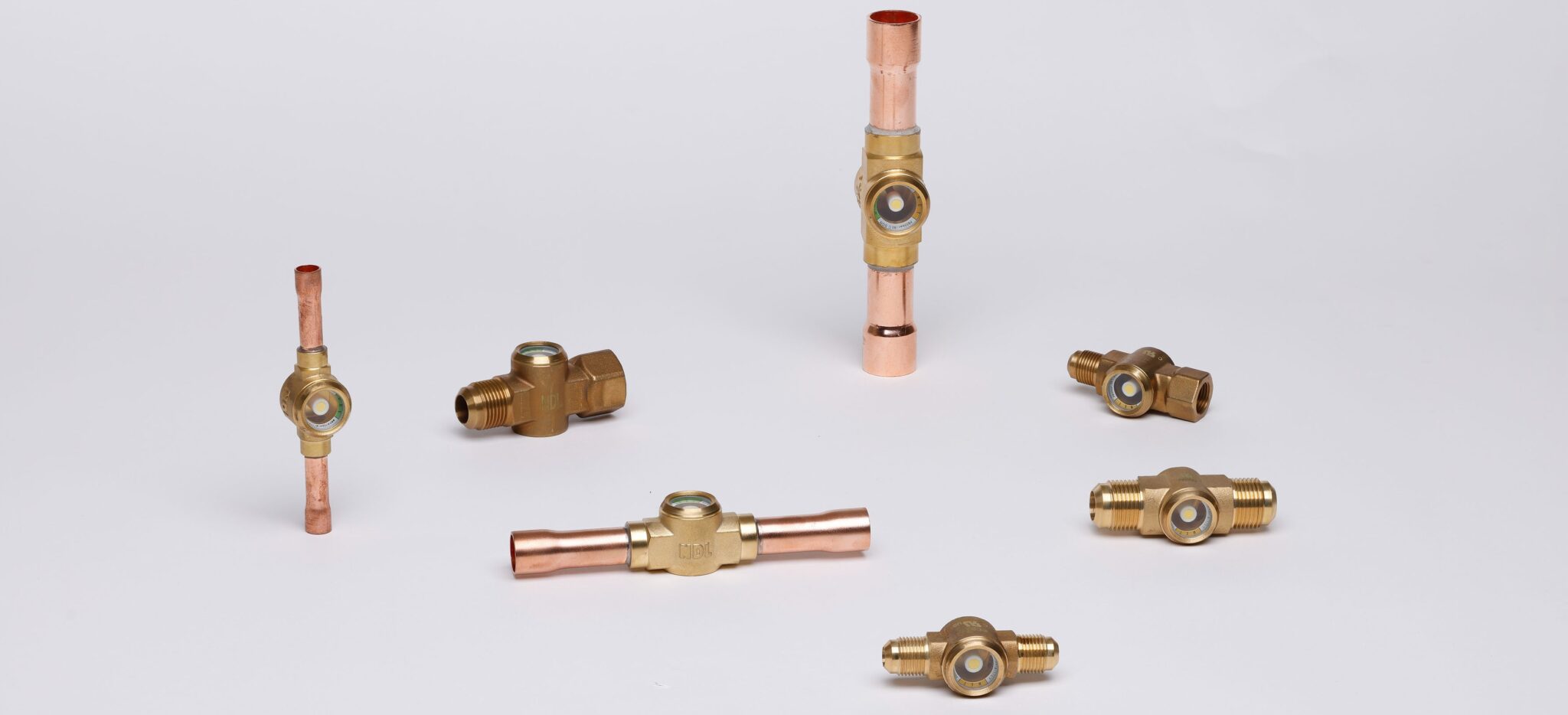
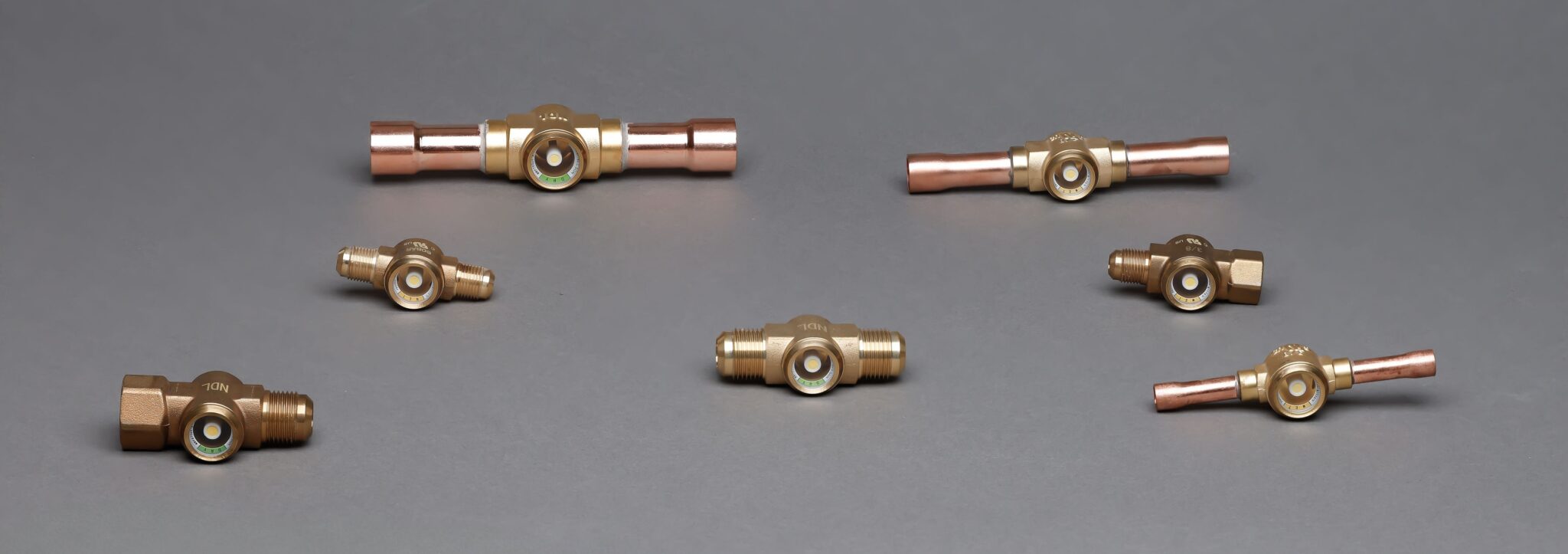
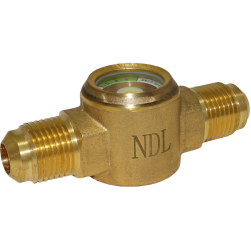
A sight glass is a device with a transparent “window” or indicator that lets you observe refrigerant and moisture conditions within the system. Our model features a full-brass body with copper extended ends and comes in both sweat (ODF) and flare (SAE) connection styles. The tube ends are oven-brazed for a secure seal, and the units can handle up to 600 PSI, making them ideal for demanding refrigeration applications.
Moisture in the refrigerant can lead to corrosion, acid formation, and reduced lubricant performance — problems well documented in ASHRAE’s research on moisture control.
Our Sight Glass Selection
Proper Usage of Sight Glasses
To get reliable readings and extend the life of the sight glass itself, correct installation and usage are important.
1. Connection Choice and Installation
2. Orientation and Flow Direction
3. System Start-Up and Fill
4. Routine Maintenance Checks
Reading Moisture Indicators of Sight Glasses
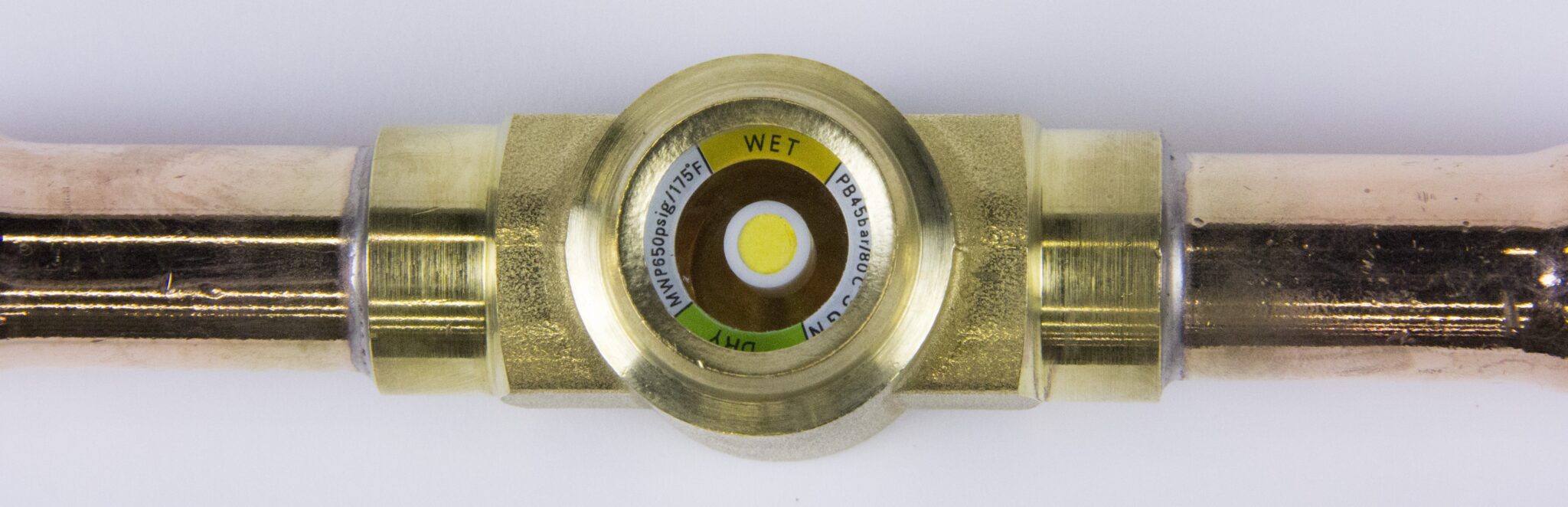
A key feature of the NDL sight glasses is a color-contrast system that provides immediate visual feedback: green indicates a dry system, yellow signals moisture. Here’s how to interpret what you see:
| Observation | What It Typically Means | Possible Actions |
|---|---|---|
| Green (dry) | System is free of significant moisture; operating normally. | Continue routine checks; ensure no sign of moisture ingress |
| Yellow (moist or wet) | Moisture has entered; it could be due to leaks, defective driers, or moisture accumulated during maintenance. | Take corrective actions: replace or regenerate dryer; locate and repair leaks; purge system; evacuate and recharge if needed. |
| Mixed or transitioning color | Perhaps the system is moving from wet to dry (after maintenance) or vice versa; this might also indicate partial moisture content. | Monitor more frequently; perhaps employ moisture measurement tools (e.g. dew point meters). |
| Bubbles in sight glass (with liquid present) | Could indicate undercharge, presence of noncondensables (air or moisture), or flow restriction. | Check refrigerant charge; ensure proper flow; check for restrictions; purge air/noncondensables. |
Your sight glasses from NDL also provide a correlation table for different refrigerants: for example, with R-22/R502, “dry” is under ~30 (units) at 25°C, “medium” 30-120, “wet” over 120; similar ranges are provided for R-134a, R-404A, R-407C, R-507, etc. This helps in quantitative assessment.
Maintaining a “dry” condition is essential, since even small amounts of water can create long-term reliability issues. The ASHRAE Refrigeration Handbook outlines the critical role of controlling contaminants and moisture in refrigerant systems.
Troubleshooting Leaks and Moisture Ingress of Sight Glasses
To get reliable readings and extend the life of the sight glass itself, correct installation and usage are important.
1. Components or Seal Leaks
2. Faulty or Saturated Filter Drier
3. Noncondensable Gas or Air Ingress
4. Moisture Generated by System Operations
5. Indicator / Sight Glass Issues
Best Practices to Maximize Reliability with NDL Sight Glasses
Today’s HVAC-R industry is also advancing moisture management beyond sight glasses, with smarter dehumidification strategies improving efficiency and reliability (ACHR News).
Keeping HVAC-R Systems Clear and Reliable
Sight glasses are a relatively low-cost, low-maintenance component, but when properly used they play a critical role in enhancing HVAC-R system reliability. They provide an early warning for moisture problems, help in diagnosing flow or refrigerant issues, and reduce the chances of severe damage or failure. Using a robust, well-designed product like the NDL Industries sight glass—with its brass body, durable ends, compatibility with many refrigerants, and clear moisture indicator—can give system owners and technicians greater confidence that their equipment will run smoothly, efficiently, and for a long time.